
Got Dirt On Your hands
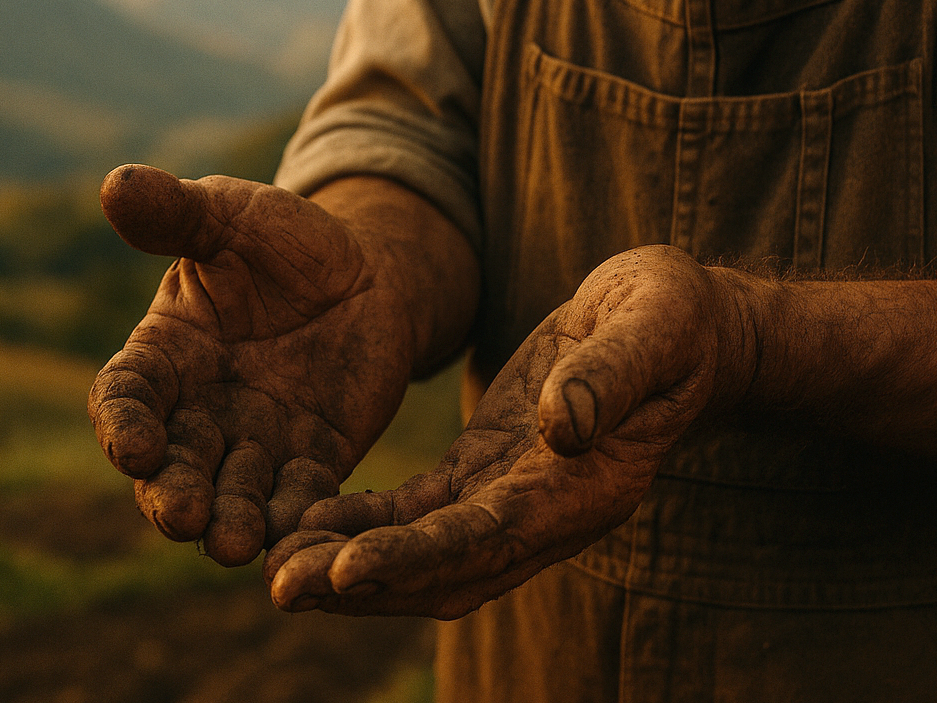
When I was a kid, I'd see parents, coaches, leaders in my life telling everyone what to do and wonder: well, what are YOU doing?! It felt like a lot of finger pointing and judgment, not a lot of doing.
Surely this helped fuel my youthful angst, a sort of punk rock anti-authoritarian streak I'm not sure I've fully grown out of. A simplification of those people’s role in my life, sure, but based on genuine frustration: It's easy to critique. It's difficult to do.
My appreciation for doers led me on a creative path. Music, art, cooking. Creative pursuits where you can't fake it. Where the results speak for themselves. In the time since, I seem to have harnessed my angst, honed it into professional creative services for the benefit of others.
But still, I occasionally encounter those finger-pointing sort of leaders. Folks operating from behind closed doors, far too busy to truly participate, but busy doing who knows what.
I also found a different sort of leader.
Player-Coaches, Leader-Mentors
The leaders who shaped me most weren't managers. They were mentors. Folks who leaned in.
I saw huge leaps in my career working with them, under them. Years later, I still see their influence in my own work. Their approaches became part of how I lead.
They were busy, certainly. But they weren't hiding behind their role either. They pulled back the curtain. Shared next-level challenges, showed me how they found solutions, and grew themselves.
Most importantly, they didn't point fingers. More than anything, they asked questions.
They stayed technically sharp. Aware of current trends in business, strategy, design, technology. Quick to understand nuanced challenges because they stayed invested and engaged and they listened. Not to judge or intimidate, but to truly understand what was happening.
They let the room breathe, asked thoughtful questions. Observed the team function, listened for insights, formulated perspective. Then they'd drop precision bombs of wisdom. Exactly what was needed, at just the right moment. Nothing more.
Still today, when I experience exceptional leadership, I'm inspired.
Sharpening My Approach
At the heart of it is asking the right questions.
With research and strategists, I ask: How might we better understand the challenge? What was most surprising to you? What is the narrative that will inspire others?
With writers, it's about understanding our audience's value system, finding tone of voice, getting down to micro-copy. How can we make this more personal, connected, meaningful?
With UX and visual designers, we're exploring customization and personalization, always evolving. I'm listening for challenges and blockers. Not providing all the answers, but empowering teams to think differently and find answers themselves. Encouraging exploration, experimentation, and controlled failure.
With the constraints teams face today - doing more with less, moving faster than ever - leadership can't be theoretical or managerial. It has to be demonstrated. In the moment. Under real pressure.
I think of myself as a leader-mentor with deep expertise and tools. That player-coach I'm talking about. I often crack open Figma, quickly design concepts, build with AI, generate functional prototypes to communicate ideas. But I do that work to inspire teams. Not to tell them what to do, or finalize the work. I couch everything with: "You're deeper in this than I am, so please ignore whatever's off base."
And I welcome everyone into my own practice. It's part of why I write and speak on these subjects. I invite early-career folks into leader conversations. I bring directors to my executive presentations. I hope to inspire those around me - my peers and our leaders, too - as they all witness me doing what I do, continually perfecting my craft.
In large team presentations and collaborations, I make space for others to shine. I facilitate, encouraging leads to drive. I insist individual contributors show their own work. Everyone benefits from developing presentation skills, learning to negotiate difficult feedback. When topics get too elevated, I jump in and demonstrate resolution.
I learn by doing, and seeing it done. I figure others do too.
Empathy Is Everything
We're all humans with our own lives, our own challenges. From individual contributors to the C-suite, we've come together in this specific scenario, this team, this meeting, this moment to do our best work. With that optimistic solutions-oriented mindset, there's no problem that can't be solved.
Of course, people get distracted. Priorities misaligned. Egos flare. Or worse, folks disengage. Who knows what they're dealing with in their own lives?
I like to say, we are all the main character in our own movie. What's critically important to you might be trivial to someone else. That word choice you're stressed about, no one else even noticed. And we have to afford the same grace to others. We have no idea what colors their perspective, what difficulties they had to navigate on their path to today’s conversation.
So, for me, leadership comes down to empathy and a desire to help.
Mentor So That you & Others Grow
Those leaders who seem like they don't actually do anything? I'm sure they are. Everyone has a lot going on and there's probably a reason they can't pull back the curtain in the way we might like.
But to those leaders, and folking aspiring to leadership: I want to encourage you to lead with empathy and vulnerability. Welcome people into your world. Share your challenges, your mistakes. Help others understand your approach.
Together, you'll continue to grow.